
· NERVICO · artificial-intelligence · 9 min read
AI Agents for DevOps and CI/CD: Intelligent Pipeline Automation
How AI agents optimize CI/CD pipelines, automate incident response, manage infrastructure, and improve deployment strategies for modern development teams.
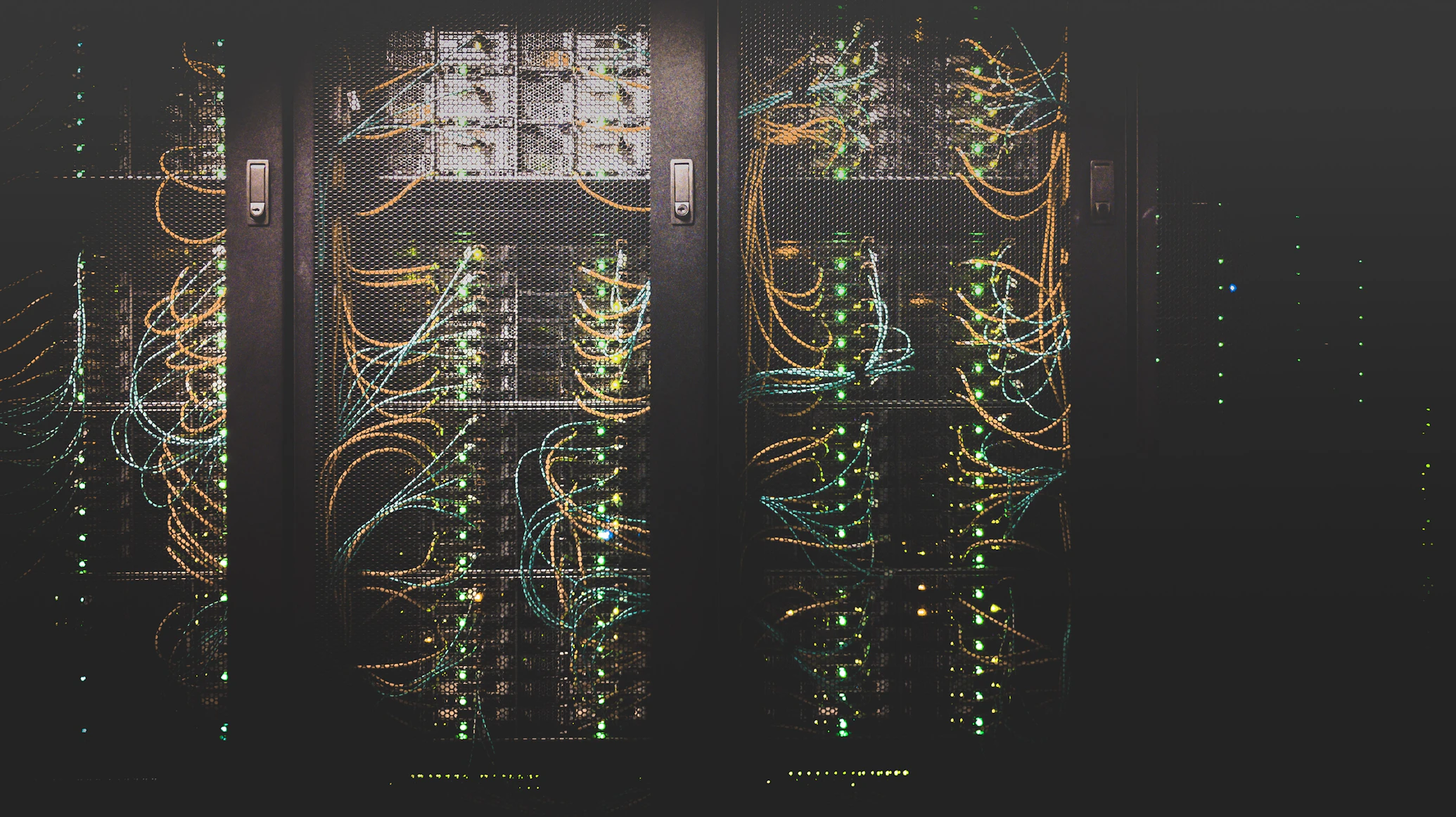
Modern CI/CD pipelines are complex systems. A mid-size project has hundreds of jobs, inter-stage dependencies, testing matrices, conditional deployments, automatic rollbacks, and post-deploy monitoring. Keeping all of this running reliably consumes a significant amount of engineering time that doesn’t appear on any product roadmap.
In 2026, AI agents are changing how DevOps teams manage this complexity. Not by replacing infrastructure engineers, but by automating the repetitive diagnostic and maintenance tasks that consume most of their time: optimizing build times, diagnosing pipeline failures, responding to incidents, provisioning infrastructure, and making more informed deployment decisions.
This article analyzes four areas where AI agents deliver real value to DevOps, with concrete tools, use cases, and recommendations for risk-free implementation.
Intelligent Pipeline Optimization
The Hidden Cost of Slow Pipelines
A slow CI/CD pipeline has a direct impact on team productivity that goes beyond wait time. When a build takes 45 minutes, developers context-switch. They start another task, lose focus, and when the pipeline finishes, they need time to return to the original context. According to development productivity studies, the real cost of a 45-minute pipeline isn’t 45 minutes: it’s between 60 and 90 minutes of lost productivity per execution.
Multiplied across a team of 10 developers running the pipeline 5 times a day, the difference between a 15-minute pipeline and a 45-minute one can mean hundreds of hours of lost productivity per month.
What AI Agents Optimize
AI agents approach pipeline optimization in ways traditional CI/CD tools cannot:
Job dependency analysis:
- Identify jobs that run sequentially but could be parallelized
- Detect unnecessary dependencies between stages
- Suggest job reordering based on historical execution times
- Calculate the potential impact of each optimization before applying it
Intelligent caching:
- Analyze which artifacts are unnecessarily rebuilt in each execution
- Suggest granular caching strategies based on code change patterns
- Detect when the cache is stale and needs invalidation
- Optimize cache size to balance restoration speed vs storage space
Intelligent test selection:
- Determine which tests need to run based on changed files
- Prioritize tests that historically detect the most defects
- Run high-risk tests first for quick feedback on failure
- Maintain full execution on release branches to guarantee total coverage
Harness AI applies machine learning to detect failed deployments before they impact users, automatically analyze success metrics, and execute rollbacks without human intervention. Their approach reduces failure detection time from minutes to seconds.
Available Tools
Spacelift offers infrastructure-as-code orchestration with AI capabilities for pipeline optimization, configuration drift detection, and auto-remediation. Their AI model analyzes execution histories to suggest project-specific optimizations.
GitHub Actions with Copilot allows describing workflows in natural language and generates corresponding YAML configurations, in addition to suggesting optimizations for existing workflows.
Automated Incident Response
The MTTR Problem
Mean Time To Resolution (MTTR) is the metric that defines a team’s operational capability. When a service goes down in production, every minute counts. The typical incident response pattern consumes time at every phase:
- Detection (1-5 minutes with configured alerts, hours without them)
- Triage (5-15 minutes to determine severity and assign a responder)
- Diagnosis (15-60 minutes to find the root cause)
- Resolution (variable depending on complexity)
- Post-mortem (30-60 minutes to document and prevent recurrence)
According to industry data, teams using AI-powered incident management platforms report an average MTTR reduction of 17.8%, with advanced implementations achieving 30-70% reductions through deep automation.
How Agents Automate the Response
Automatic detection and classification:
AI agents process signals from multiple sources simultaneously: logs, infrastructure metrics, APM alerts, user reports, and health checks. Instead of generating an alert for each signal, they correlate events to identify real incidents and reduce noise.
- Group related alerts into a single incident
- Automatically classify severity based on user impact
- Assign to the correct team based on affected component
- Provide immediate context: what changed recently, similar previous incidents, relevant runbooks
AI-assisted diagnosis:
- Analyze logs in real time searching for error patterns
- Correlate incident timing with recent deployments
- Automatically consult internal documentation and runbooks
- Suggest probable root cause with confidence level
PagerDuty has incorporated an AI SRE agent that analyzes incident history and suggests relevant runbooks to responders in real time. Its Event Intelligence module groups related alerts and reduces the volume of alerts requiring human attention.
incident.io offers an AI SRE agent that automates the triage and diagnosis phases, reducing time engineers spend gathering information and allowing them to go directly to resolution.
Harness AI SRE focuses on proactive problem detection, identifying anomalies before they become incidents and automating predefined responses.
Responsible Implementation
The goal isn’t to remove humans from incident response. It’s to remove the manual work of information gathering. Humans remain necessary for:
- Making high-impact decisions (rolling back a critical service)
- Communicating with stakeholders
- Evaluating complex trade-offs (fix now vs wait for low-traffic hours)
- Designing permanent fixes
The safest implementation starts with agents that assist rather than act autonomously. Let the agent gather logs, suggest causes, and propose actions, but have a human approve each action before execution.
Intelligent Infrastructure Provisioning
Infrastructure as Code With AI Assistance
Infrastructure management has evolved significantly with IaC adoption (Terraform, Pulumi, CloudFormation). But writing and maintaining infrastructure configurations remains work that requires deep knowledge of cloud providers, their APIs, and their quirks.
AI agents add value across several dimensions:
Configuration generation:
- Convert high-level descriptions into infrastructure code
- Apply security and cost best practices automatically
- Generate configurations that comply with team standards
- Detect configuration errors before applying changes
Drift detection and correction:
- Continuously monitor real infrastructure vs code definition
- Detect manual changes not reflected in code
- Suggest corrections to return to desired state
- Alert when drift represents a security or compliance risk
Cost optimization:
- Analyze real resource usage vs provisioned capacity
- Identify oversized or underutilized instances
- Suggest rightsizing based on real usage patterns
- Estimate the economic impact of each infrastructure change
Pulumi published predictions for 2026 describing how AI is transforming infrastructure management, with agents capable of provisioning and managing cloud resources based on high-level intent, not detailed configurations.
Predictive Auto-Scaling
Traditional auto-scaling is reactive: it detects CPU at 80% and adds instances. By then, users are already experiencing latency.
AI agents implement predictive auto-scaling:
- Analyze historical traffic patterns (daily, weekly, seasonal peaks)
- Correlate with external events (marketing campaigns, launches, seasonal events)
- Scale infrastructure before demand arrives
- Reduce resources when they predict low demand, saving costs
Intelligent Deployment Strategies
Beyond Blue-Green and Canary
Traditional deployment strategies (blue-green, canary, rolling) are effective but static. They define fixed rules: “deploy to 5% of users, wait 10 minutes, deploy to 25%.” They don’t adapt to what’s actually happening.
AI agents enable adaptive deployment strategies:
Canary with automatic analysis:
- The agent deploys to the configured traffic percentage
- Monitors key metrics in real time (latency, error rate, throughput)
- Automatically compares with the previous version baseline
- Decides to advance, pause, or rollback based on data, not timers
Risk-based deployment:
- The agent evaluates each deployment’s risk based on:
- Change size (number of files, lines modified)
- Affected components (core vs periphery)
- Team history (historical rollback rate)
- Deployment timing (Monday at 9 AM vs Friday at 6 PM)
- Automatically adjusts deployment strategy to risk level
Intelligent feature flags:
- Agents manage gradual feature exposure
- Monitor feature-specific metrics
- Automatically disable features when detecting degradation
- Generate adoption and performance reports by user segment
Automatic Rollback With Context
Traditional automatic rollback triggers when a metric crosses a threshold. This generates false positives (a temporary latency spike doesn’t justify rollback) and false negatives (gradual degradation that doesn’t cross any threshold).
AI agents apply contextual analysis:
- Distinguish between temporary anomalies and sustained degradations
- Evaluate multiple metrics simultaneously (a latency increase with stable error rate may be acceptable)
- Consider deployment context (first release of a new feature vs hotfix for a bug)
- Automatically document rollback reasoning for post-mortem
DORA Metrics and AI Impact
The Four Key Metrics
DORA metrics (Deployment Frequency, Lead Time for Changes, Change Failure Rate, Time to Restore Service) are the industry standard for measuring a team’s delivery capability.
AI agents directly impact all four:
Deployment Frequency: Pipeline automation and build time reduction enable more frequent deployments.
Lead Time for Changes: Pipeline optimization and intelligent testing reduce time from commit to production.
Change Failure Rate: Risk analysis and automated testing catch problems before they reach production.
Time to Restore Service: Automated incident response dramatically reduces MTTR.
Real Impact Data
Teams implementing AI in their CI/CD pipelines report:
- 30-50% reduction in build times through intelligent optimization
- Average MTTR reduction of 17.8%, with advanced implementations achieving 30-70%
- Increased deployment frequency by reducing perceived risk of each deploy
- Improved change failure rate by detecting problems in canary before full rollout
Implementation Roadmap
Phase 1: Observability (Weeks 1-4)
Without data, there’s no AI. Before implementing agents:
- Instrument your pipelines to collect per-job execution times
- Configure DORA metrics as a baseline
- Establish incident monitoring with severity classification
- Document your most common runbooks (agents will need them)
Phase 2: Pipeline Optimization (Weeks 5-8)
- Implement intelligent test selection on your development branch
- Configure advanced caching based on dependency analysis
- Experiment with job parallelization
- Measure impact on lead time and deployment frequency
Phase 3: Incident Response (Weeks 9-12)
- Integrate a triage agent that classifies and contextualizes alerts
- Configure assisted diagnosis that suggests root cause
- Maintain human approval for all remediation actions
- Measure impact on MTTR
Phase 4: Intelligent Deployment (Month 4+)
- Implement canary with automatic metric analysis
- Configure contextual rollback (not just threshold-based)
- Experiment with risk-based deployment
- Measure impact on change failure rate
Risks and Considerations
What Can Go Wrong
Premature excessive automation: Automating incident responses without sufficient data history can cause more problems than it solves. An agent that rolls back due to a normal anomaly loses the team’s trust.
Dependency on data quality: AI agents are only as good as the data they consume. If your metrics have gaps, your logs are inconsistent, or your alerts are misconfigured, the agent will make incorrect decisions.
Additional complexity: Adding AI agents to your pipeline adds one more component to maintain, monitor, and debug. Make sure the added complexity is justified by the value generated.
Principles for Safe Adoption
- Start with assistance agents, not action agents. Let them suggest, not execute.
- Maintain the ability to operate without AI. If the agent fails, your pipeline must keep working.
- Measure before and after. Without clear metrics, you can’t justify the investment or detect regressions.
- Regularly review agent decisions. Even when automation works, periodically audit that decisions remain correct.
Conclusion
AI agents don’t eliminate the need for a competent DevOps team. What they do is free that team from repetitive diagnostic, optimization, and maintenance tasks so it can focus on higher-impact work: infrastructure architecture design, platform strategy, and enabling development teams.
Responsible adoption starts with observability, continues with gradual optimization, and only reaches full automation when data demonstrates the agent makes correct decisions consistently.
Want to optimize your CI/CD pipelines with AI agents?
At NERVICO we help technical teams implement intelligent DevOps:
- Pipeline audit: We analyze your current pipelines and identify concrete optimizations
- AI incident response implementation: We configure triage and diagnosis agents integrated with your stack
- Adaptive deployment strategies: We design risk-based deployment strategies for your context
- Training: We upskill your team in AI-assisted operations
No hype. No premature automation. Just pragmatic infrastructure engineering.
Request free technical audit — We’ll evaluate your pipelines and tell you exactly where AI agents deliver measurable value.